
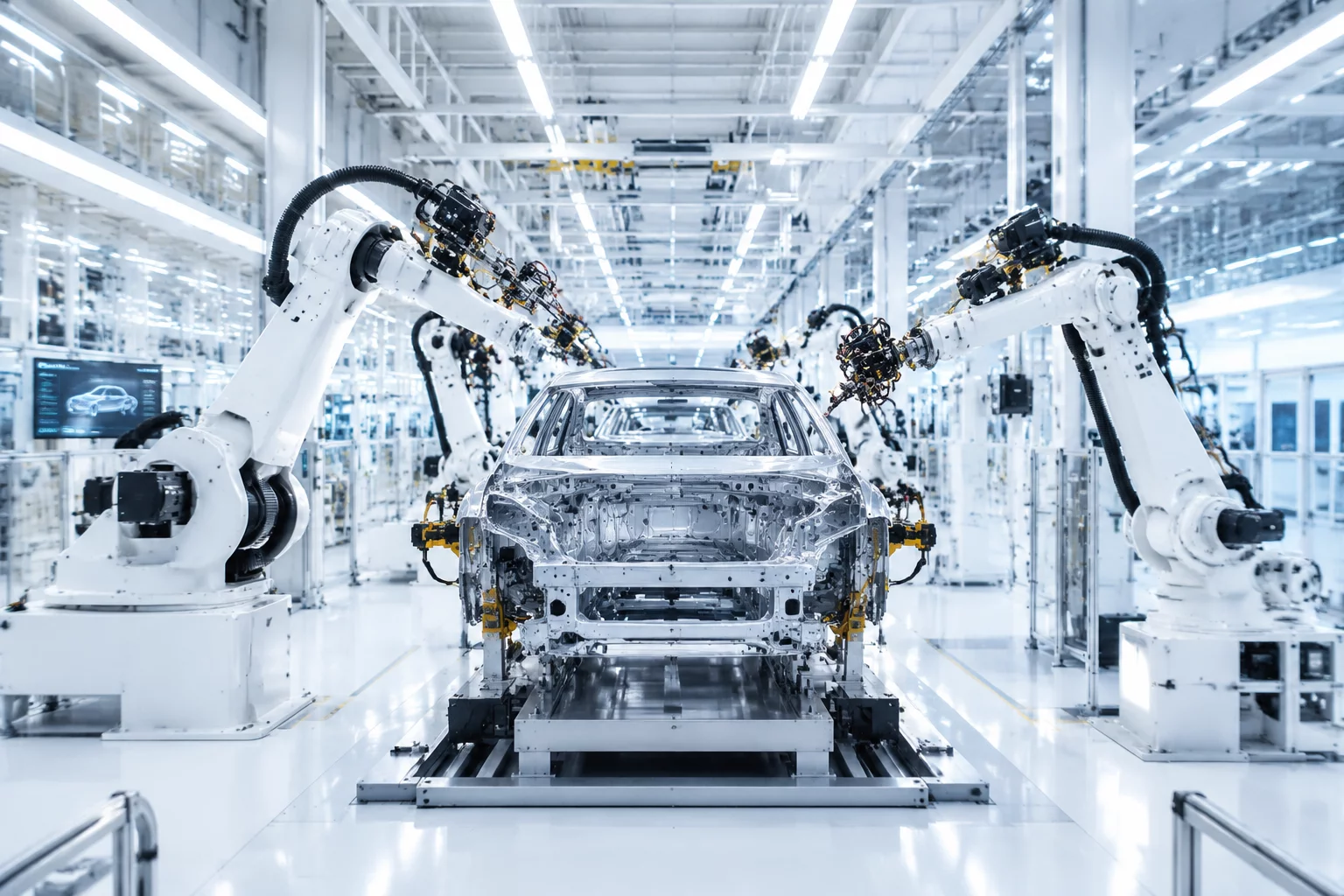
Dynamic Multi-Powertrain Industrial Integration
The Sportwagenschmiede 35 strategy establishes an integrated operational framework designed to navigate shifting vehicle demand cycles across global regions. Instead of segregating factory lines by specific powertrain types, Porsche AG configures advanced modular tooling across its primary facilities in Zuffenhausen and Leipzig. This allows assembly lines to transition between battery-electric vehicles, performance hybrids, and classic internal combustion setups with minimal line modification downtime.
Industrial modeling indicators demonstrate that decoupling factory throughput from single-technology dependencies substantially lowers idle capacity risks. Manufacturing simulation software orchestrates parts staging and robotic sequencing in real time, balancing station workloads regardless of unit variation.
- Dynamic station pacing algorithms adjusting assembly cadence based on individual chassis complexity.
- Automated guided transport systems routing battery packs and internal combustion drivetrains to common marriage points.
- Digital twin validation processes reducing pre-series prototyping cycles from months to days.
"Manufacturing agility is the defining operational requirement of the decade. Creating facilities capable of producing any drivetrain configuration on demand protects structural capital and operational stability."
— Oliver Taylor, Strategic Manufacturing Analyst
Capital Efficiency and Fixed Cost Optimization Matrix
A core pillar of the Sportwagenschmiede 35 blueprint focuses on structural expenditure recalibration. By standardizing mounting interfaces and electronic architecture modules across model families, engineering overhead drops substantially. Component commonality allows procurement teams to pool baseline orders, unlocking scale efficiencies even in lower-volume specialty model segments.
Detailed cost modeling projects indicate that structural overhead reduction programs will safeguard operational margins during multi-year platform transitions. Routine maintenance schedules now incorporate predictive sensor analytics, preventing unexpected assembly stoppages and smoothing long-term capital allocation curves.
Scenario Forecasting and Global Demand Sensitivity
Strategic planning within modern automotive engineering requires continuous scenario modeling rather than static multi-year forecasting. Sportwagenschmiede 35 integrates algorithmic sensitivity models that evaluate regional supply constraints, localized emissions benchmarks, and shifting consumer preferences.
By simulating shifts across major distribution corridors, the strategic model allows executive planners to adjust regional production allocations months before market bottlenecks materialize. This structural resilience ensures steady throughput while mitigating inventory build-ups.